LSM-Trees
ZNS SSDs
CXL Memory
RL for Data Systems
FPGA Co-Design
Bufferpool Management
Welcome to CHiLL@UMB! We develop cutting-edge data management solutions for modern storage and memory devices and next-generation storage engines. Our current research focuses on ML-driven optimization of LSM-tree compactions, LSM-tree block cache optimization and LSM tuning, efficient operation of ZNS SSDs, and CXL-enabled disaggregated database systems. A common theme across many of our work is exploiting the internal characteristics of SSDs, in particular their read/write asymmetry and internal parallelism, which we capture in a parametric I/O model and use to redesign bufferpools, graph processing, and multi-tiered storage. We explore RL-inspired approaches to classical and emerging data management problems, such as indexing and query optimization, making data systems more autonomous and performance-stable. We also work on hardware/software co-design using FPGA to support on-the-fly near-data transformation for efficient HTAP workloads. We aim to make data systems faster and more autonomous by building them around the hardware they run on.
We tune LSM compaction parameters via reinforcement learning based on workload properties, enabling self-adapting storage engines.
Coming SoonWe revisit how an LSM engine allocates and manages its block cache, so that memory is spent where it actually reduces read cost.
Coming Soon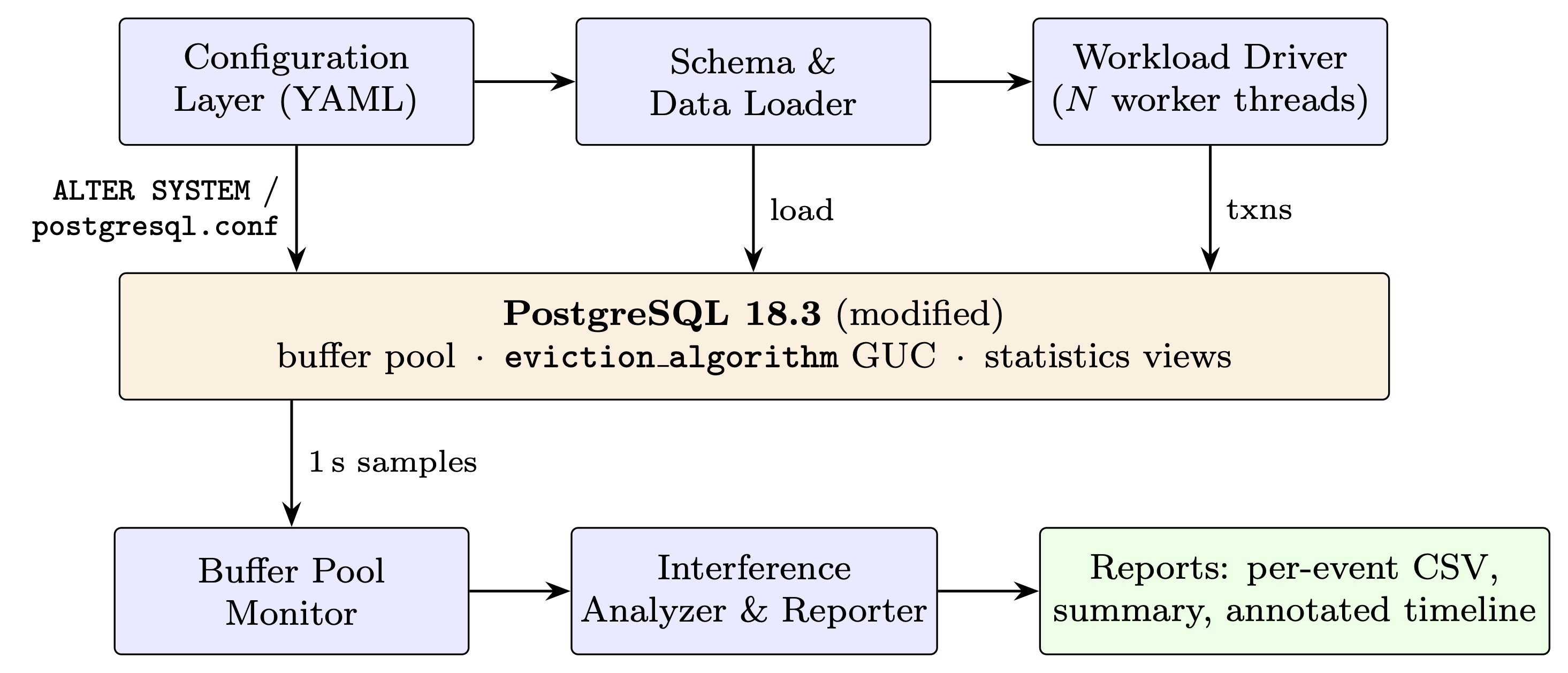
BufBench is an open-source benchmarking framework that exposes what a PostgreSQL buffer pool is really doing across a range of workloads, including page eviction, buffer utilization, and background process interference.
Learn more →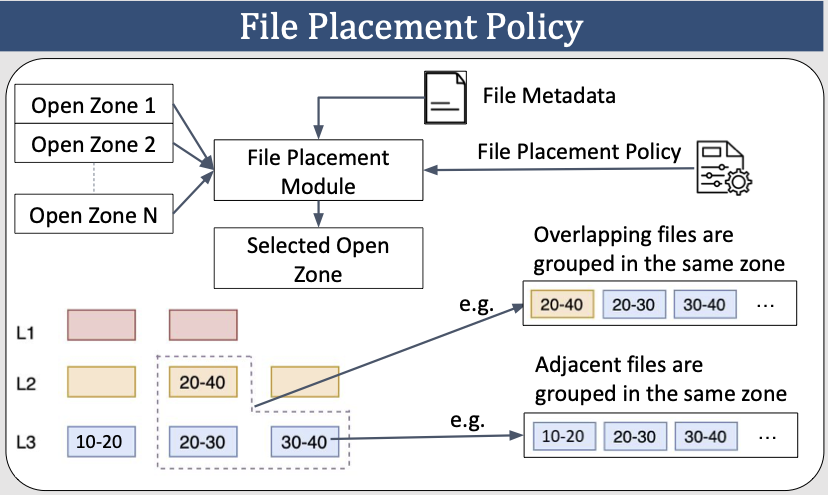
ZARC integrates any file placement, garbage collection, and zone allocation policies to identify the best combinations across different LSM compaction strategies and workloads.
Learn more →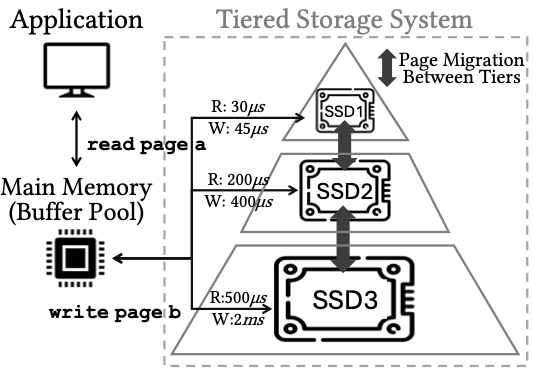
A reinforcement learning-based page migration policy for multi-tiered storage that considers both workload and device (SSD) properties simultaneously.
Learn more →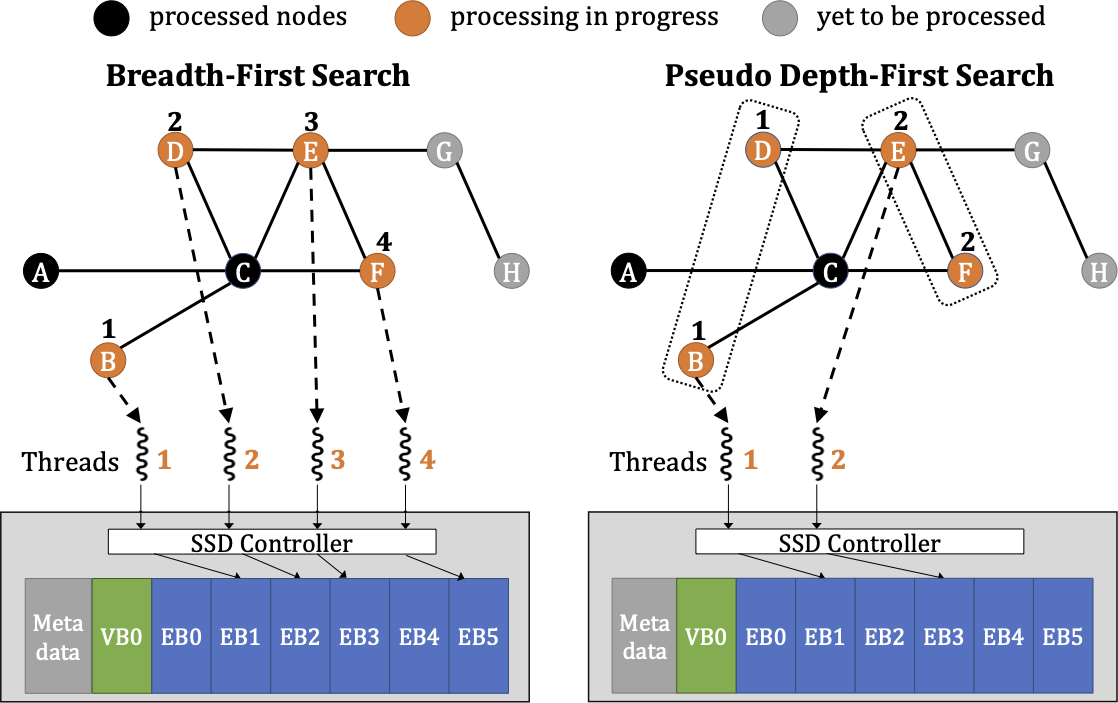
CAVE exploits full SSD parallelism for graph processing, implementing five popular graph traversal algorithms with hardware-aware concurrency control.
Learn more →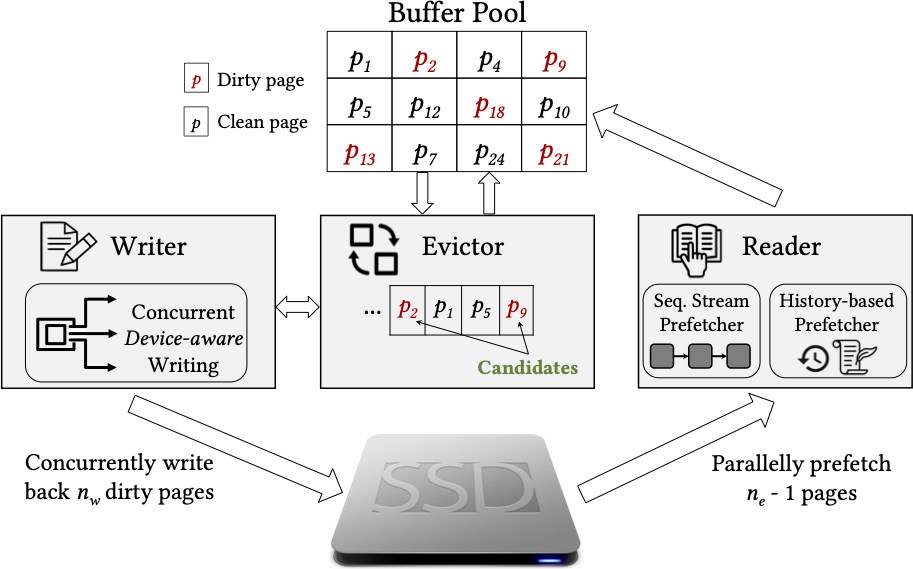
ACE writes multiple dirty pages concurrently to amortize the asymmetric write cost of SSDs, rethinking the bufferpool management paradigm for modern storage.
Learn more →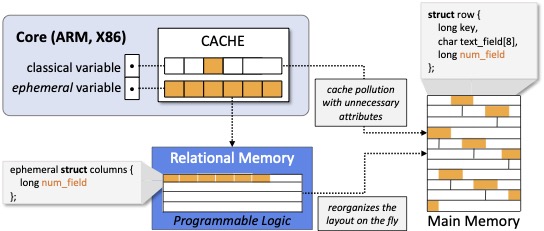
An FPGA-based near-memory computation system that transforms between row-wise and column-wise data on the fly, reducing cache pollution while ensuring optimal data layout for any query.
Learn more →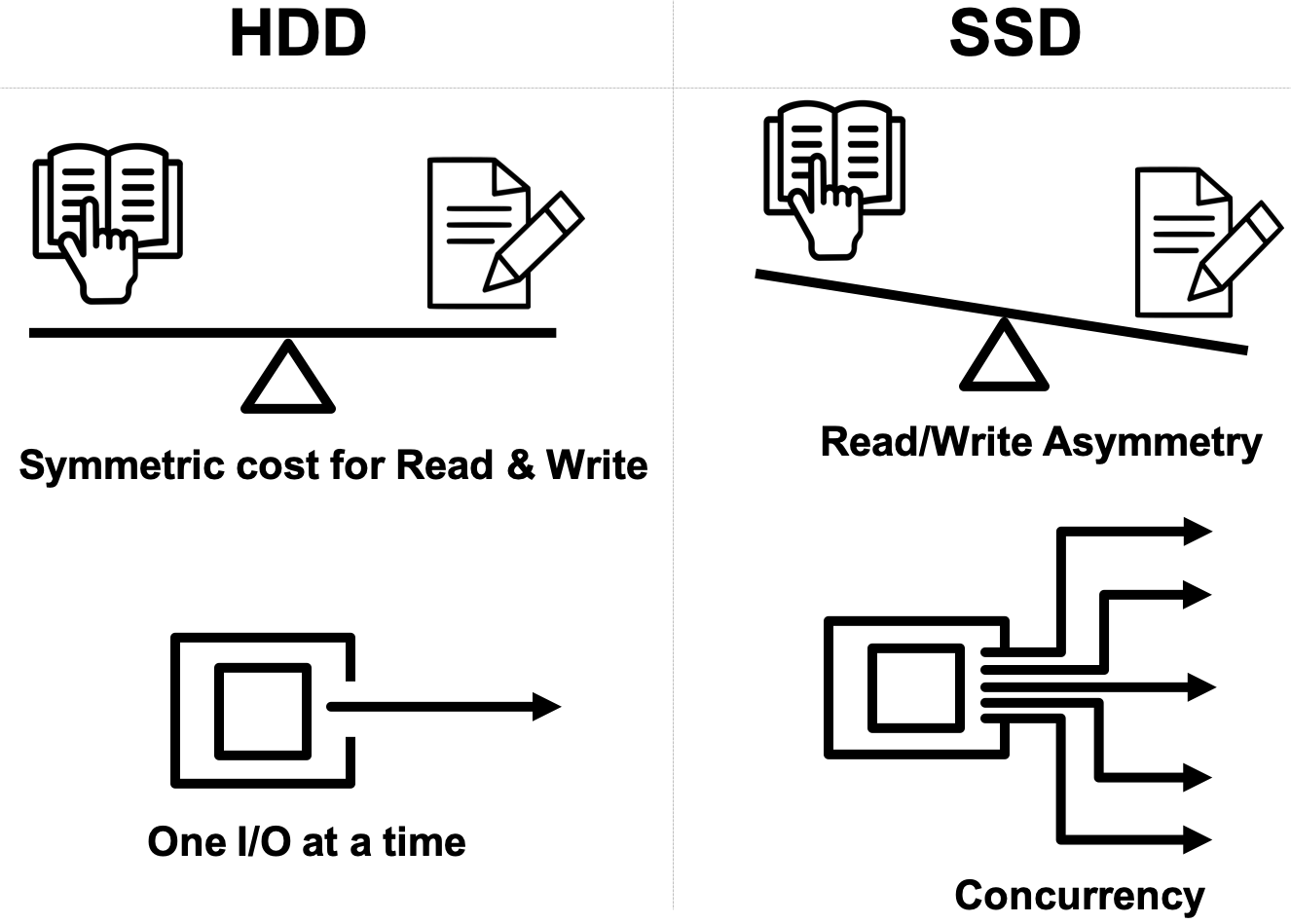
A simple yet expressive I/O model that captures asymmetry and concurrency of contemporary storage devices, forming the theoretical foundation for device-aware system design.
Learn more →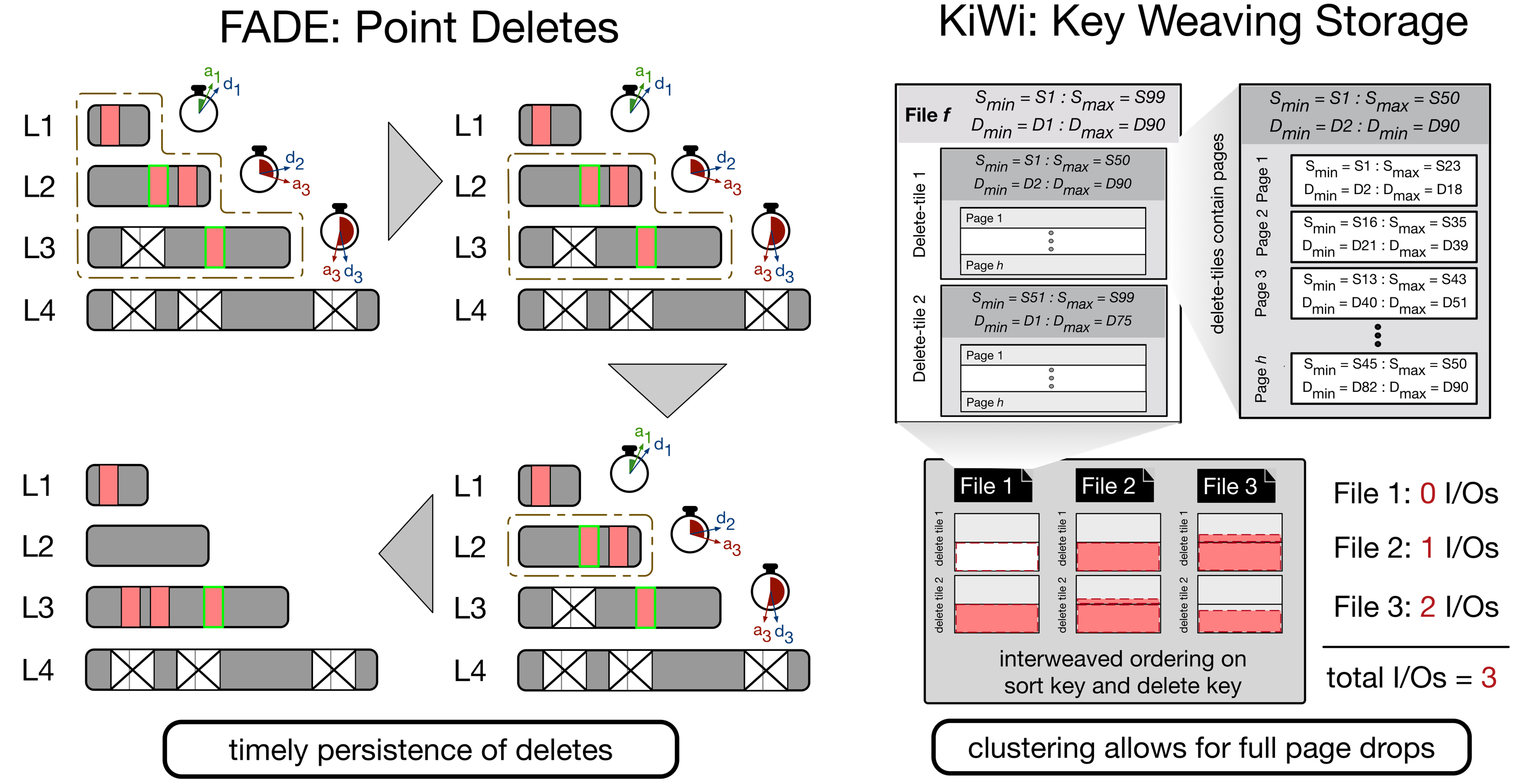
Lethe provides persistence guarantees for delete operations within bounded time and enables efficient secondary range deletes in LSM-based storage engines.
Learn more →





The internals of a database kernel: indexing and query optimization, database update programming, and the ACID properties. The course covers concurrency theory (serializability, two-phase locking, deadlock detection), transactional recovery through REDO/UNDO logging and checkpointing, transactional performance analysis, distributed database systems and two-phase commit, and database parallelism.
Database applications are software systems that solve real-world problems while storing their data in relational databases behind practical user interfaces. Topics include system specification from user needs, analysis of data flow and work flow, object design, database design, client–server techniques, and rapid prototyping. Students work in teams on a real project through the term.
C programming for students with prior experience in a high-level language. The course treats C both as a machine-level language and as a general-purpose one, covering number representation, bitwise operations, memory allocation, dynamic data structures, file I/O, separate compilation, program development tools, and debugging.
A seminar on technology — in particular information technology — and how it relates to our lives. Students read both fiction and non-fiction in which technology is at issue and discuss it in written and oral work, individually and in small groups. The goal is to understand the many facets of information technology and its social implications.
UMass Boston is on the JFK/UMass stop of the MBTA Red Line, with a free shuttle to campus. McCormack Hall is on the upper level of the campus quad; the CS Department is on the third floor.